
The Performance Marketer’s Guide to Choosing the Right Avatar Engine
A Real-User Authority Guide — Tested Against Active Ad Campaigns
Table of Contents
The Avatar Problem Brands Are Finally Solving
Here is the reality no one in the UGC space wants to say out loud: most brands are not losing on strategy. They are losing on production speed.
You know the winning formula — talking-head ad, authentic delivery, direct hook, clear CTA. The problem is executing it at the pace that paid social actually demands. Meta’s creative fatigue window has compressed to under two weeks for high-frequency campaigns. TikTok’s algorithm rewards fresh content with a shelf life measured in days. Waiting three weeks for a UGC creator to deliver one video — at $300 to $500 per piece — is not a production workflow. It is a competitive disadvantage.
Best AI Avatar Solutions for UGC Product Ads in 2026 to solve this exact problem. Not to replace the creative instinct behind a great ad, but to eliminate the logistical ceiling that prevents teams from testing at the speed the market now requires.
This guide evaluates four platforms that have earned their position at the top of that category in 2026. Each is assessed on the metrics that actually determine campaign performance: avatar realism, workflow speed, customization depth, multilingual capability, and pricing transparency.
How to Evaluate AI Avatar Tools — The Performance Lens
Most reviews compare AI avatar tools by feature count. Performance marketers need a different framework entirely.
Avatar realism determines scroll-stop rate. A viewer who clocks your ad as AI within two seconds is a lost impression. The platform’s rendering quality, lip-sync accuracy, and micro-expression range directly affect whether your creative enters the consideration window at all.
Iteration speed determines testing velocity. The team that can generate 20 hook variations in an afternoon will outlearn the team that produces two. Workflow friction — from script input to final export — is a competitive variable, not a UX footnote.
Customization depth determines persona consistency. A brand running avatar-led ads across multiple campaigns needs the same face, voice, and delivery style across every creative. Platforms that limit custom avatar creation force you to rotate stock presenters and rebuild audience familiarity from scratch.
Multilingual capability determines market ceiling. If your avatar platform cannot localize to your key markets with natural-sounding voice synthesis, you are leaving international revenue on the table.
With that framework in place, here are the four platforms that currently lead the category.
Tool 1: Argil AI — The Personal Clone Engine for Founder-Led UGC
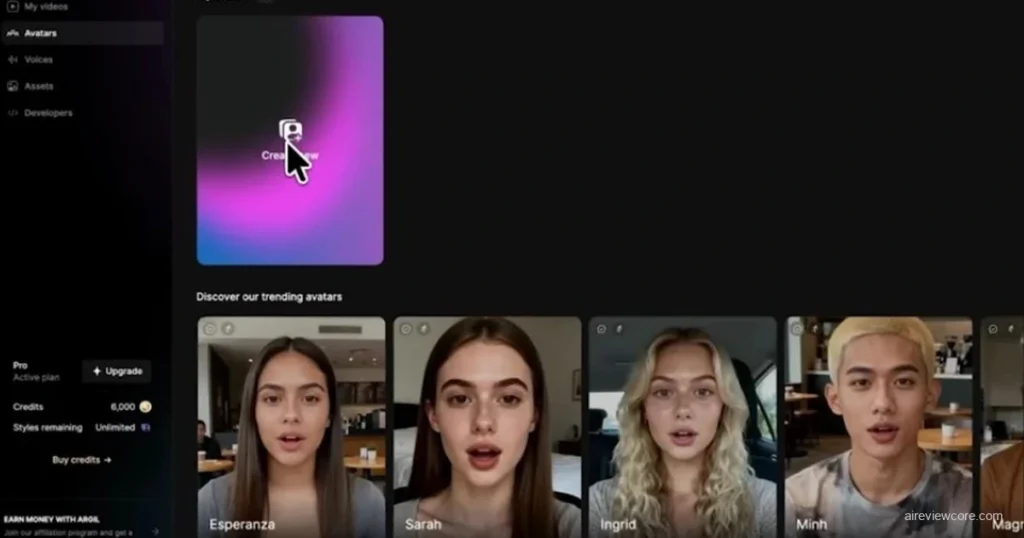
Argil occupies a specific and increasingly valuable position in the AI avatar market: it is built for creators and brands who want to appear in their own ads — without sitting in front of a camera every day.
The core mechanic is simple and powerful. Record two minutes of yourself speaking naturally. Upload it to Argil. The platform generates a photorealistic AI clone of you — matching your face, voice, expressions, and mannerisms — that can then deliver any script you write, in any language, indefinitely. No reshoots. No scheduling. No performance anxiety.
For founder-led brands where the face behind the product is the trust signal, this is not a convenience feature. It is a strategic asset.
What Separates Argil From Stock Avatar Platforms
The critical difference between Argil and tools offering pre-built avatar libraries is authenticity at the identity level. Stock avatars, no matter how realistic, are strangers to your audience. A founder’s own AI clone carries accumulated brand equity — the same face that appears in organic content, on the website, in email campaigns. Argil lets you scale that face into paid creative without the production overhead that typically makes it prohibitive.
The platform’s production workflow is also built for iteration. Multiple hook variations can be generated from a single script without rebuilding the creative from scratch. Avatar personas can be swapped against the same message for persona testing. And Argil’s automatic B-roll generation, caption layering, and background customization mean exports are ad-ready without additional post-production.
Expert Workflow: Maximizing Argil for Performance Campaigns
- Record your source footage with variety. Argil’s clone quality improves significantly when the source recording includes natural head movement, varied expressions, and a range of speaking paces. A flat, stationary two-minute recording produces a flatter clone. Move naturally. Smile. Pause. The AI captures range, not just appearance.
- Build a hook library before launching. Generate the same core script with five different opening hooks — curiosity gap, direct pain point, bold claim, social proof, and pattern interrupt. Run all five simultaneously at low budget. Your winning hook tells you more about your audience psychology than any single ad ever could.
- Use avatar swapping for demographic testing. If Argil’s library avatars suit your product category better than a personal clone for certain campaigns, use both. Test the founder face against a demographically matched stock avatar. The performance delta reveals whether personal brand equity or audience identification drives conversion for your specific offer.
- Export raw for platform-specific formatting. Argil’s auto-captioning is production-ready, but export raw tracks separately for any platform requiring specific caption styling or burned-in subtitles. This adds one step but preserves maximum flexibility for Meta, TikTok, and YouTube Shorts formatting requirements.
Pricing Overview
| Plan | Price (Annual) | Trial Offer |
| Free Trial | $0 | 5-Day Free Trial |
| Classic | $27/mo | Available |
| Pro | $104/mo | Available |
| Scale | $349/mo | Available |
Expert Verdict: Argil is the highest-ROI avatar tool for founders, consultants, and personal brands running direct-response campaigns — because a digital clone of the person behind the product carries trust signals that no stock avatar library can replicate, and the iteration speed eliminates the production bottleneck that makes founder-led content difficult to scale.
Tool 2: Synthesia — The Enterprise Standard for Multilingual UGC at Scale
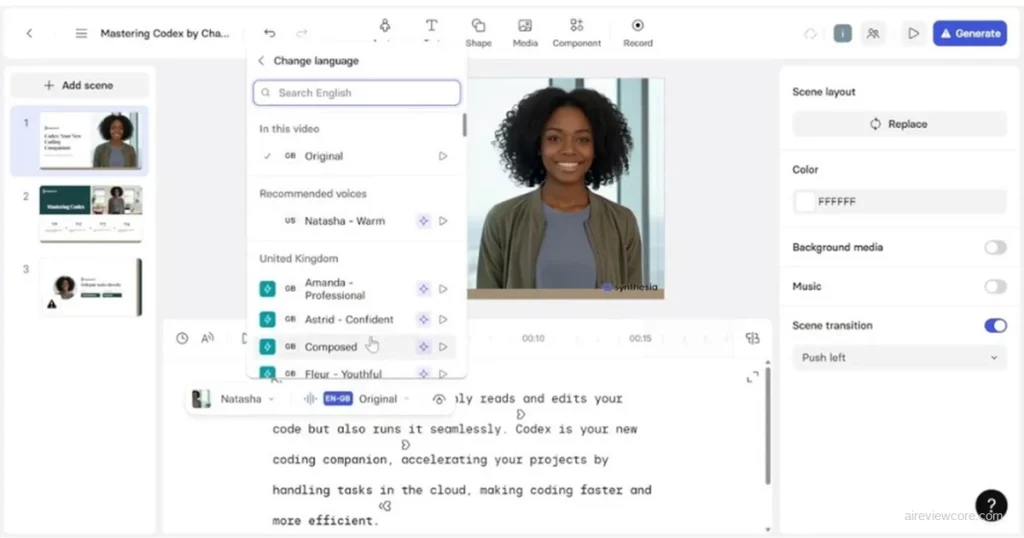
If Argil solves the personal brand problem, Synthesia solves the global scale problem. It is the platform that enterprise marketing teams and international brands default to when consistent, professional-quality video content needs to reach audiences across dozens of markets simultaneously. This capability is why Synthesia is a top contender among the Best AI Avatar Solutions for UGC Product Ads in 2026 for global scaling.
The numbers define the capability: 230+ diverse stock avatars, support for 140+ languages with native-accent voice synthesis, and custom avatar creation from video footage for brand-specific digital spokespeople. For a global brand running coordinated campaigns across English, Spanish, French, German, and Japanese markets, Synthesia eliminates what would otherwise be five separate production workflows.
What Separates Synthesia From the Field
The platform’s strongest differentiator is not avatar count — it is the combination of multilingual depth with professional-grade rendering quality. Synthesia avatars are not casual creator-style presenters. They are polished, studio-quality spokespeople with natural gestures, consistent eye contact, and lip-sync accuracy that holds up across all supported languages.
For enterprise teams operating in regulated industries, Synthesia also provides SOC 2 compliance and GDPR-aligned data governance — features that are irrelevant for a solo DTC brand but non-negotiable for financial services, healthcare, and SaaS companies with legal requirements around content production.
The brand kit integration ensures visual consistency across all video output regardless of which team member is generating content. Fonts, colors, logos, and approved templates are centralized, eliminating the brand fragmentation that occurs when distributed teams produce videos independently.
Expert Workflow: Getting Enterprise-Grade Output From Synthesia
- Build your custom avatar before scaling. Synthesia’s stock avatar library is extensive, but custom avatar creation — building a digital twin from your actual spokesperson or founder — delivers brand consistency that stock presenters cannot. Invest the time in this step before committing to volume production. A consistent face across all campaigns compounds trust over time.
- Use the language testing matrix. Before localizing to all 140+ languages, identify your three highest-revenue international markets and generate test ads in those languages first. Validate conversion rates before expanding the localization workflow to your full market list. This prevents investing production time in markets that may not respond to the UGC format.
- Layer the brand kit across every template. Synthesia’s brand kit only delivers value if it is applied consistently. Build your approved template set before distributing platform access to team members. Inconsistent visual execution across markets undermines the perceived professionalism that Synthesia’s avatar quality establishes.
- Combine with screen recording for SaaS demos. Synthesia’s screen capture integration lets you combine avatar narration with live product interface footage. For SaaS companies running UGC-style product ads, this format — a human-looking presenter walking through the actual product — significantly outperforms pure talking-head content.
Pricing Overview
| Plan | Price (Annual) | Trial Offer |
| Free (Basic) | $0 | No credit card required |
| Starter | $18/mo | Available |
| Creator | $64/mo | Available |
| Enterprise | Custom | Let’s talk |
Expert Verdict: Synthesia is the default choice for enterprise marketing teams and global brands — its combination of professional avatar quality, 140+ language support, and compliance infrastructure makes it the only platform that can support multilingual UGC production at genuine enterprise scale without sacrificing output consistency.
Tool 3: Colossyan — The Collaboration-First Platform for Multi-Avatar UGC
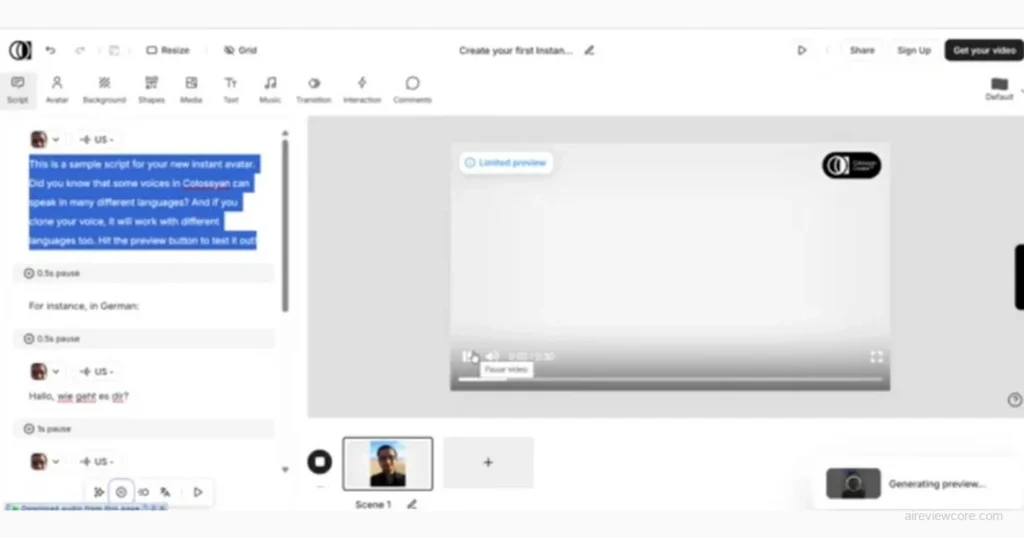
Colossyan enters the category from a distinct angle: it is built for teams, not individuals. Where most AI avatar platforms optimize for solo creators generating high-volume content, Colossyan prioritizes collaborative workflows, diverse representation, and a format capability that no other platform in this list offers — multi-avatar video conversations.
The ability to place two or more AI avatars in a single video, engaging in natural dialogue, opens a content format unavailable elsewhere in the AI UGC space. Product comparison scenarios. Customer-and-advisor testimonial formats. Problem-solution conversations that feel less like ads and more like organic social content. For brands whose creative testing has exhausted the standard single-presenter talking-head format, this is a meaningful differentiation.
What Separates Colossyan From the Field
The platform’s auto-translate feature handles a technical challenge that competitors struggle with: simultaneous translation of both voice synthesis and on-screen text overlays, maintaining lip-sync accuracy across 70+ languages. Most translation workflows require separate post-production passes for audio and visual elements. Colossyan handles both in a single generation step, which matters significantly for teams managing localized campaigns across multiple markets on compressed timelines.
The collaboration infrastructure — team workspaces, approval workflows, version control, and commenting tools — reflects a design philosophy built for marketing departments rather than freelancers. Multiple stakeholders can review, annotate, and approve content within the platform without exporting files or managing external feedback cycles.
Expert Workflow: Unlocking Colossyan’s Unique Format Advantages
- Test the multi-avatar conversation format against single-presenter ads. Before treating this as a novelty feature, run a direct A/B test: your standard talking-head ad versus a two-avatar conversation format covering the same script. The results will determine whether the format resonates with your specific audience. For B2B audiences and considered purchases, the dialogue format frequently outperforms monologue delivery.
- Build localization templates before translating. Colossyan’s auto-translate is only as consistent as the template it is applied to. Build your visual template — background, text placement, branded elements — before running translation. This ensures that localized versions maintain visual identity rather than generating formatting variations across language outputs.
- Use approval workflows for distributed teams. If multiple stakeholders review ad creative before launch, set up Colossyan’s approval chain before generating content. Building the review process into the platform eliminates the file management overhead that slows content from production to launch.
- Match avatar demographics to target markets. Colossyan’s avatar library emphasizes demographic diversity specifically to support localized campaigns. Use the filtering tools to select presenters who match the regional audience for each market. Conversion data consistently shows that viewer identification with the presenter improves performance for testimonial-format content.
Pricing Overview
| Plan | Price (Annual) | Key Feature |
| Free | $0 | 3 mins video |
| Starter | $19/mo | 3 Instant Avatars |
| Business | $70/mo | Unlimited Video |
| Enterprise | Custom | 200+ avatars |
Expert Verdict: Colossyan is the strongest choice for marketing teams running collaborative workflows and brands testing multi-avatar conversation formats — its combination of team infrastructure, auto-translate accuracy, and dialogue-format capability fills a gap that solo-creator-focused platforms leave entirely uncovered.
Tool 4: AdStellar AI — The Full-Stack Platform That Closes the Loop Between Creation and Conversion
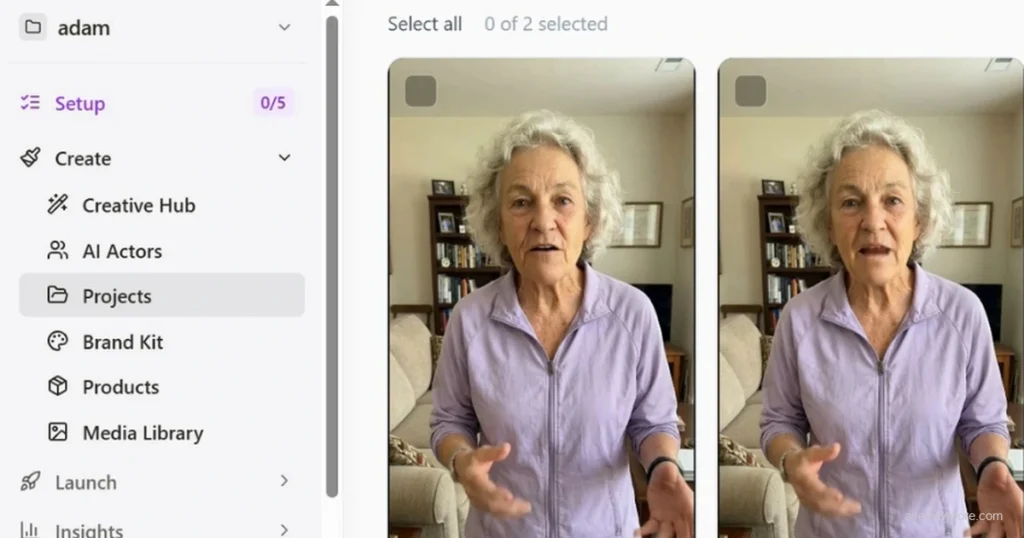
Every other tool in this guide solves the creation problem. AdStellar solves the creation-to-conversion problem — and the difference matters more than it initially appears.
The standard AI UGC workflow has a structural gap: you generate the avatar ad in one platform, export it, log into Meta Ads Manager, build your campaign manually, set audiences, write headlines, configure ad sets, launch, then check back in separately to analyze performance. Every handoff between tools is a friction point where momentum dies, testing slows, and campaign launch windows get missed.
AdStellar eliminates that gap entirely. The platform generates UGC-style avatar ads from product URLs, then launches them directly to Meta with AI-optimized audiences, headlines, and copy — inside the same interface where you built the creative. Performance data flows back in real time, automatically ranking creatives by ROAS, CPA, and CTR, and informing the next generation cycle.
What Separates AdStellar From the Field
The platform’s defining capability is closed-loop learning. Most AI UGC tools are stateless — they generate content without any awareness of how previous content performed. AdStellar’s AI analyzes your historical campaign data before building new campaigns, using what actually worked in your account to inform audience selection, creative structure, and bid strategy. The platform gets more accurate over time in ways that standalone avatar generators cannot.
For performance marketers running Meta campaigns at meaningful spend levels, this is not a convenience feature. It is a compounding advantage that widens with every campaign cycle.
Expert Workflow: Using AdStellar as a Closed-Loop Performance System
- Connect your Meta account before generating any creative. AdStellar’s AI needs access to your historical performance data to generate its first optimized campaign recommendation. Connecting the account before your first creative generation allows the platform to inform your avatar selection, hook structure, and CTA language based on what has already converted in your account.
- Use the competitor ad cloning feature as your starting point. AdStellar can pull high-performing ads directly from the Meta Ad Library and use them as creative briefs for new avatar content. This gives you a proven format foundation before investing in original hook testing. Start with what the market has already validated, then iterate toward differentiation.
- Let the automatic leaderboard run for 72 hours before scaling. AdStellar’s performance ranking system needs at minimum 72 hours of impression data before its ROAS and CPA signals are statistically meaningful. Resist the urge to scale winners or kill losers before that window closes. Premature optimization on thin data is the most common waste of budget in high-frequency creative testing.
- Combine URL-to-video generation with manual script refinement. AdStellar’s automated script generation from product URLs is fast and usable as a first draft, but the highest-converting ads consistently come from teams who refine the AI-generated hook before generating the final avatar video. Spend five minutes sharpening the opening line. The downstream impact on CTR justifies the time.
Pricing Overview
| Plan | Price (Monthly) | Trial Offer |
| Hobby | $49/mo | 7-Day Free Trial |
| Pro | $129/mo | 7-Day Free Trial |
| Ultra | $499/mo | 7-Day Free Trial |
Expert Verdict: AdStellar is the tool for performance marketers who have already validated the UGC format and need to compress the distance between creative generation and campaign results — its closed-loop system between avatar production and Meta campaign optimization is a capability class that no standalone avatar generator currently matches.
The Full Comparison: Which AI Avatar Solution Wins at What?
| Tool | Avatar Type | Best For | Multilingual | Starting Price | Reliability |
| Argil AI | Personal Clone | Founder-led Ads | 70+ Languages | $27/mo | High |
| Synthesia | Professional Stock | Global Campaigns | 140+Language | $18/mo | High |
| Colossyan | Diverse Stock | Team Workflows | 70+Languages | $19/mo | High |
| AdStellar AI | UGC + Meta Ads | Performance Ads | Limited | $49/mo | High |
The decision framework is direct: if your brand’s face is the trust signal, Argil is your foundation. If you are running multilingual campaigns across global markets, Synthesia’s language depth and enterprise compliance justify the investment. If your team runs collaborative approval workflows or needs multi-avatar conversation formats, Colossyan fills a gap the others leave open. And if your priority is compressing the distance between creative production and campaign results on Meta, AdStellar is the only platform in this category that closes that loop natively.
Integrating AI Avatars Into Your Existing UGC Stack
These tools do not operate in isolation. The highest-performing AI UGC workflows in 2026 combine avatar generation platforms with downstream production tools for maximum output quality.
If you are already using Arcads or Creatify for high-volume stock avatar content, the tools in this guide layer naturally on top — Argil for founder-led variations, Synthesia for international localization, and AdStellar for closing the gap between your creative output and your Meta campaign performance.
The complete stack is not about redundancy. Each platform solves a distinct constraint in the production pipeline. The brands outperforming on paid social in 2026 are not using one tool. They are using the right tool for each specific content objective.
Your Action Plan: Matching Tool to Business Model
The AI avatar category has matured past the point where any single platform serves all use cases equally. Here is the decision tree:
- Founder or personal brand running direct-response ads? Start with Argil. Your face is your most differentiated creative asset — clone it before testing anything else.
- Enterprise or global brand with multilingual requirements? Synthesia’s 140+ language support and enterprise compliance features are non-negotiable at this scale. Nothing else in the category matches it.
- Marketing team with collaborative approval workflows? Colossyan’s team infrastructure eliminates the review friction that slows content from creation to launch.
- Performance marketer with proven Meta spend and active campaigns? AdStellar closes the loop that every other tool in this list leaves open. Connect it to your active account and let the historical data inform your first campaign cycle.
The production barrier is gone. The talent dependency is gone. What remains is choosing the Best AI Avatar Solutions for UGC Product Ads in 2026 for your specific use case — and building the testing velocity that turns creative production speed into measurable campaign advantage.
Research sourced from verified user data, platform documentation, and active campaign performance analysis | 2026 AI Avatar Authority Guide